|

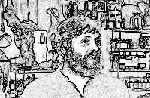
This photograph was taken in 1975 shortly after the S.A. first opened.
Today he shuns publicity and does not advertise anywhere save the web,
relying on word of mouth to spread his unique teachings.
|
  The Sixth &
Seventh Book of Moses: Moses Magical Spirit Art The Sixth &
Seventh Book of Moses: Moses Magical Spirit Art
 Aradia: Gospel of The Witches Aradia: Gospel of The Witches
The Book of Black Magic,
Ceremonial Magic and Pacts
 The Malleus Maleficarum: The Hammer of The
Witches.? The Malleus Maleficarum: The Hammer of The
Witches.?

Sacred Magic: Is this The Most
Powerful Grimoire of All
Time? Did it unleash Crowley's Aeon of Horus?
 Mediaeval
Ideas
on
Invoking Demons,
Complete with Pact you can print
out and frame. Mediaeval
Ideas
on
Invoking Demons,
Complete with Pact you can print
out and frame.
Audio-Spells
To Download - Chant Along with Marabas
Occult
Yearplanner
Love Magic
Protection
Lamp of Thoth Magazine
Exorcisms
Unhexing
Psychic
Self
Defence
Reincarnation / Regression
Testimonials
Beginner's Guide
CyberBooks
CDs/Digital Audios
Lessons, Teach-Ins
Lectures
Reversing Ill Luck
Wicca
High Magick Spells To Download
Paganism
Witchcraft
Erotic Spells
Aromatherapy
Root Magic
Book of Shadows
Good Luck
Pathworking
Exorcism
NEW!
 GET FLASHMAIL UPDATES BY EMAIL GET FLASHMAIL UPDATES BY EMAIL
You Get First Crack of The Whip on New Lines,
Special Offers and
Services.
Add your name to our emailing list and get Flashmail updates every two
to three months.
We will not send you any info from anyone else but us and we promise
not to pester you.
Send an Email to:

Add Your Name Now!
|
Margin Magic
Watch for this series of
unique and informative introductions to
various occult skills and activities. Collect them all. They appear on
the left hand column of most of our webpages. |
The Truth About
MYSTIC MEMORY / DEJA VU
You've Experienced It Yourself. It's Proof Of Your
Own Latent Psychic Abilities.
Reliving scenes
and conversations which we unaccountably appear to have lapsed memories
about is termed Deja Vu or Mystic Memory. It is a VERY common human
experience. So common that it is often taken for granted as some kind
of 'trick' of the brain, yet the review below shows that it is in fact
a major magical technique to gaining access to the inner-planes and is
prime-facie evidence of the disruption of time and space which as an
explorer of the esoteric and psychic worlds you yourself may learn how
to replicate.
On the 17th February 1828
the eminent Sir Walter Scott entered in his Diary, that, on the
preceding day at dinner, he was strangely haunted by what he would call
' the sense of
pre-existence ;' namely, a confused idea
that nothing that passed was said for the first time—that the same
topics had been discussed, and the same persons had stated the same
opinions on them.
The sensation, he adds,
' was so strong
as
to resemble what is called a mirage, when lakes are seen in the desert,
and sylvan landscapes in the sea. . . . There was a vile sense of want
of reality in all that I did and said.'
In his novel Scott has Guy
Mannering, one of his characters say:
' Why is it
that some
scenes awaken thoughts which belong, as it were, to dreams of early and
shadowy-recollection, such as [others] would have ascribed to a state
of previous existence ? How often do we find ourselves [with people]
which we have never before met, and yet feel impressed with a
mysterious and ill-defined consciousness that neither the scene, the
speakers, nor the subject are entirely new ; nay, feel as if we could
anticipate that part of the conversation which has not yet taken place'
Occultists take this as an
evidence that our mental part has actually had an existence before our
present bodily life, souls being, so to speak, created from the
beginning, and attached to bodies at the moment of mortal birth.
Many intelligent folk see
the thousands of cases on record as cases of fore-knowledge. Mystics
hold that the human mind is capable of foreseeing the future more or
less distinctly. May we not suppose that, in dreams or waking reveries,
we sometimes anticipate what will befall us, and that this impression,
forgotten in the interval, is revived by the actual occurrence of the
event foreseen?
In the Confessions of
Rousseau there is a remarkable passage which appears to support this
theory. This singular man, in his youth, taking a solitary walk, fell
into a reverie, in which he clearly foresaw 'the happiest day of
his life,' which occurred seven or eight years afterwards.
'I
saw myself as in an ecstasy, transported into that happy time and
occasion, where my heart, possessing all the happiness possible,
enjoyed it with inexpressible raptures, without thinking of anything
sensual. I do not remember being ever thrown into the future with more
force, or of an illusion so complete as I then experienced; and that
which has struck me most in the recollection of that reverie, now that
it has been realized, is to have found objects so exactly as I had
imagined them. If ever a dream of man awake had the air of a prophetic
vision, that was assuredly such.'
Rousseau tells how his
reverie was realized, at a fete champetre, at a place which he had not
previously seen.
' The condition
of mind
in which I found myself, all that we said and did that day, all the
objects whch struck me, recalled to me a kind of dream whcih I had at
Annecy seven or eight years before, and which I have given an account
in writing previously. The relations were so striking that in thinking
of them I could not refrain from tears.'
This brings to mind a
similar experience published as "An Adventure", about
two English lady
tourists walking in modern day Versailles Palace who both somehow
'stepped through' time into the period of Louis IV. Their detailed
investigations into what they saw during the twenty minute 'break in
time' proved beyond doubt that what they had seen was factually
correct, even reporting the existence of buildings extant then, but
which had since been remodelled or demolished. Neither ladies had
ever been to France before.
Mr Elihu Bich has many times
experienced 'the mysterious sense of having been surrounded at some
previous time by precisely the same circumstances' and presents us with
another case. A gentleman of high intellectual attainments, now
deceased, told Bich that he had dreamed of being in a strange city, so
vividly that he remembered the streets, houses, and public buildings as
distinctly as those of any place he ever visited. A few weeks
afterwards he was startled by seeing the city of which he had dreamed.
The likeness was perfect, except that one additional church appeared in
the picture. He was so struck by the circumstance that he spoke to the
exhibitor, assuming for the purpose the air of a traveller acquainted
with the place. He was informed that the church was a recent
erection.
.
The case of Mr John Pavin Phillips, of Haverfordwest, contains even
greater detail.
'I was seated at
the
breakfast-table with some members of my family,
when suddenly the room and objects around me vanished away, and I found
myself, without surprise, in the street of a foreign city. Never having
been abroad, I imagined it to have been a foreign city from the
peculiar character of the architecture. The street was very wide, and
on either side of the roadway there was a foot pavement elevated above
the street to a considerable height. The houses had pointed gables and
casemented windows overhanging the street. The roadway presented a
gentle acclivity ; and at the end of the street there was a road
crossing it at right angles, backed by a green slope which which rose
to the eminence of a hill and was crowned by more houses over which
soared a lofty tower, either of a churh or ome other ecclesiastical
building. As I gazed on the scene before me I was impressed with an
overwhelming conviction that I had looked upon it before, and that its
features were perfectly familiar to me ; I even seemed almost to
remember the name of the place, and whilst I was making an effort to do
so a crowd of people appeared to be advancing in an orderly manner up
the street. As it came nearer it resolved itself into a quaint
procession of persons in what we should call fancy dress or perhaps
more like one of the guild festivals which we read of as being held in
some of the old continenal cities.
As the procession came abreast of the spot where I was standing I stood
onto the pavement to let it go by and as it filed past me, with its
banners and gay paraphernalia flashing in the sunlight, the
irresistible conviction again came over me that I had seen this same
procession before, and in the very street through which it was now
passing. Again I almost recollected the name of the concourse and its
occasion ; but whilst endeavouring to remember
the effort dispelled the vision, and I found myself, as before, seated
at my breakfast-table, cup in hand. My exclamation of astonishment
attracted the notice of one of the members of my family, who inquired
what I had been staring at. Upon telling them about the vision, which
appeared to me to embrace a period of considerable duration, it became
apparent that it must have been to them just an instant. The city, with
its landscape, is indelibly fixed in my memory, but the sense of
previous familiarity with it has never again been renewed. The " spirit
of man within him " is indeed a mystery ; and those who have witnessed
it cannot but have been impressed with the conviction that there are
dormant faculties belonging to the human mind, which, like the
rudimentary wings said to be contained within the skin of the
caterpillar, are only to be developed in a higher sphere of being.'
A still more remarkable case
is that from the memoirs of Mr William Hone, who was originaly a
hard-bitten materialist. In the course of business he visited the city
of London for the first time.
I was shown
into a room
to wait. On looking round, everything appeared perfectly familiar to me
; I seemed to recognise every object. I said to myself, " What is this
? I was never here before, and yet I have seen all this ; and, if so, I
know that there is a very peculiar knot in the shutter." ' He
opened the shutter, and found the knot! ' Now then,' he thought,
here is something I cannot explain according to my existing beliefs;
there must be some power beyond matter.'
This case is just one where
'proof' of the 'reality' of the 'memory' is undoubted as nothing else
can account for the preconception of the knot in the shutter, or the
case of the extraneous church in the visioned city.
An
experience of Mystic
Memory / Deja Vu might be supposed to arise from a previous dream, or
it may be a day reverie, perhaps one of only an instant's duration and
very recent occurrence, in which the assemblage of objects and
transactions was foreseen. It could also easily be a kink in time which
enables us to be in one time dimension whilst viewing another. Whatever
the true mechanics of it are the existence of these experiences are far
too common to simply be taken as 'quirks' of memory and those of an
enquiring mind look upon them as validation of the existence of states
beyond matter and justification
for experimenting further to try to gain control over willed
events. One things is for sure. What we call 'reality' is only
one of a number of alternative images of normality whcih are as
maleable and flexible as the images seen on your TV screen. Exploring
other realities is what occultism is all about as Marabas will teach
you if you follow his lecture tapes and writings.
- 0 -
|
The
Sorcerer's Apprentice
Time Honoured
Good Luck Seal
None Genuine
Without This Logo
|
The
Sorcerer's
Apprentice
6-8 Burley
Lodge Road
Leeds LS6
1QP
Yorkshire
U.K.
Tel/Fax
0739-7295212 [24hrs]
From
Overseas +44 739-7295212
|
You are Visitor Number :  Greetings
and
Come
on in to look round - a warm
welcome to established clients and new seekers from all of us here at
the one-and-only.....
The Sorcerer's Apprentice®
Europe's Original Occult Supplier Reaches Anyone
Worldwide.
Established in Leeds, in 1975 and in the same Adept's hands
today. Your guarantee of a traditional link with the ancient wisdom. No
NAN (New Age Nonsense) on this site - just genuine, powerful,
traditional esotericism
|
"One of the Best Kept Secrets In Occultism"
The Sorcerer's Apprentice ® 
Mail
Order Service is the Original Occult
Supplier, renowned for over three decades for trustworthy, confidential
and above all, genuine Occult Paraphernalia which are unique and
unobtainable elsewhere. This is the genuine
stuff.We don't handle other firms' goods and we don't dropship.
Everything you see here on this site is unique and sits on
our shelves right now, waiting for your order. From our premises in
Leeds, Yorkshire we have been preparing, producing and supplying people
in your locality with exclusive equipment and information for decades.
Long before Internet Shopping became a reality the Sorcerer's
Apprentice® has been regularly providing the most complete and
uncensored mail-order service to Magicians, Witches, Shamans, Pagans,
Wiccans, Houngans, Priests, Spiritists, Psychics, Sorcerers, Dowsers,
Mediums, Ghost Hunters, Yogis, and Researchers into the supernatural in
almost every country throughout the world. Whether you are a raw
beginner, early student or an Adept we provide what the
Johnny-come-latelys cannot. Click on your interests below to discover
the genuine world of the Occult.
CUSTOMERS
THINKING OF CALLING MUST CLICK HERE FIRST
|
|
INSTANT MAGICAL
SOLUTIONS ONLY FROM
The Sorcerer's Apprentice®
Got
a problem or urgent need? Want to know how to work rites and
ceremonies the adept way? Need a quick magical fix? Then
scan our selection of Instantly Downloadable Magical Spells, Lessons,
Methods and Occult Techniques and pick the ones you need and put them
to work tonight from over 70 of Marabas's absolutely genuine and
never before published Occult Exercises and Practices. Compiled
especially so beginners can help themselves instantly , immediately,
tonight, right now - with the security of one of the world's most
trusted adepts behind you. Click this
link and open up a whole new world for yourself.
|
OF YOUR CHOICE SHOWING HOW YOU CAN DEVELOP
PSYCHIC POWER AND SKILLS (value 4.97) WHEN YOU SPEND OVER £50.00:
You can claim one of
Frater
Marabas's unique monographs on how to develop your magical and psychic
powers FREE with any order you place over £50.00. Just Click here for a list to choose from and tell
us which one
you want for free in the remarks/comments section when you check out
your order.
You can claim a Free Lesson
EVERY TIME you place an order totalling 50.00 or more, and build up a
storehouse
of secret initiated information for your use at no charge.
|
|

The S.A.'s tried-and-tested Cyber Spells...
|
Ten Minute Occult Spells You can Work at Home, Tonight,
Right now, With Trustworthy Lessons and Unique Instructions which
Beginners can understand whilst containing all the esoteric secrets
Advanced Students require. All from a genuine adept whom you can
contact and question.
A treasure-trove of genuine occult wisdom
from one of the
|

world's most trusted adepts; for you to download, learn
and apply right now - no waiting!
Absolutely unique
esoteric know-how exclusively from us. Choose your solution from
the table below, download and apply it straightaway. |
 EXCLUSIVE
GENUINE
AUDIO-SPELLS Download
Straightaway and Chant Along to Cast your Magic.
Listen to Marabas. He shows how to pronounce the magic words and gives
you unique insight and shortcuts into working your magical rites,
whether you are a complete newcomer or old hand. EXCLUSIVE
GENUINE
AUDIO-SPELLS Download
Straightaway and Chant Along to Cast your Magic.
Listen to Marabas. He shows how to pronounce the magic words and gives
you unique insight and shortcuts into working your magical rites,
whether you are a complete newcomer or old hand.

 EXCLUSIVE AND GENUINE OCCULT COURSES: Compact
Discs, Audio-Files, Lecture Cassettes by Marabas, Spell Workshops,
Hypnosis Recordings, Home Study Courses
EXCLUSIVE AND GENUINE OCCULT COURSES: Compact
Discs, Audio-Files, Lecture Cassettes by Marabas, Spell Workshops,
Hypnosis Recordings, Home Study Courses  in Witchcraft and Magic, CDs,
Tapes etc in Witchcraft and Magic, CDs,
Tapes etc
Cyber Books, Ebooks, Kindles,
Digibooks
Sacred
Dital
info
at
your fingertips. Whatever you call them these
digitised and exclusive ebooks by Marabas can be downloaded and read
within minutes. Print out the ritual scripts or every page in the book
if you like. At a BIG saving. Wherever you live in the
world you can now learn from and apply Marabas's occult wisdom in a
trice. Click on the links below for
more information. It's like having an adept at your shoulder.
|
THE FAMOUS CANDLEMAGICK
SPELLBOOK 
thousands sold and not one disatisfied customer! This book shows you
how to work simple candlemagick at home on your own.
|
|
 BEGINNERS' GUIDE
TO PAGANISM, WICCA, SHAMANISM BEGINNERS' GUIDE
TO PAGANISM, WICCA, SHAMANISM
learn about the real origins of Wicca and Neo Paganism, not the
sterilised version aluded to across the net.
|
|
MARABAS SAYS 
An omnibus of advice and off-the-cuff wisdom Marabas has offered to
hundreds of beginners and advanced seekers.
|
|
The ROOT MAGIC
GUIDE and The MAGICAL  HERBAL A-Z HERBAL A-Z
If you think you know about Louisiana Van Van, Obeah Oils and Santeria
Magic then think again, Marabas will show you where it all began and
how you can use it properly.
|
|
SECRETS OF MIND
CONTROL 
Long years before the NSA and GCHQ were mapping your every move Marabas
explained that one insidious organisation had been doing it for
centuries.
|
|
 LEWES SATANIC
DEATH CURSE LEWES SATANIC
DEATH CURSE
The Guardian newspaper-man who liaised with Julian Assange and let him
down, is here exposed by Marabas as he analyses a myth in the making.
|
|
MARABAS'S DREAM
BOOK 
and
you thought you actually went to sleep at night. Now listen to the
messages, omens and predictions from your deep unconscious.
|
|
DOORWAYS TO THE
ANCIENT WISDOM 
if you believed archaeologists when they told you prehistoric man was
some kind of cretinous dullard you will be astonished at Marabas's
revelation about the sophisticated concepts of prehistoric
paganism.
|
|
 KOMBUCHA MANUAL KOMBUCHA MANUAL
Can Kombu Cure the World? Read Marabas's Kombucha Manual for how it can.
|
ANGELIC IMAGES!
 Click Here to
learn how to invoke Angelic
Entities and other Telesmatic Images Click Here to
learn how to invoke Angelic
Entities and other Telesmatic Images |
THE PATHS OF MAGIC;
A
Primer of Genuine Occultism. It's like cutting out the first 18 months
of confusion. |
|
 PSYCHIC SELF-DEFENCE
and MAGICAL RETRIBUTION: PSYCHIC SELF-DEFENCE
and MAGICAL RETRIBUTION:
packed
full of initiated self-protection and rare unhexing techniques which
you can employ using little known kitchen-table ingredients.
|
|
The
World's first Occult Census of occultists, pagans, magicians,
qabbalists and shamans in the U.K. How they worship, what magic they
employ good and bad. Proof that magick works and why.
|
 The
Lamp
of
Thoth
Magazine The
Lamp
of
Thoth
Magazine
The legendary
LOT magazine. Infamous as the source of genuine no-holds barred
initiated magic. Not for the squeamish or anally retentive.
|
|
 THE OCCULT
YEARPLANNER: THE OCCULT
YEARPLANNER:
The
indispensible Magicians' and
Witches' Occult Yearplanner/Almanack & Moonchart. If you are going
to work magic you MUST have this set of tables. Shows how to
calculate best times etc.
|
|
 Elemental
Gateway
Symbol
Cards:
Learn to manipulate Elemental Forces and project power
by visualising
these powerful symbols and glyphs. The most potent aid to successful
magic ever. Elemental
Gateway
Symbol
Cards:
Learn to manipulate Elemental Forces and project power
by visualising
these powerful symbols and glyphs. The most potent aid to successful
magic ever.
|
 Tree of Life Charts: Tree of Life Charts:
Simplest Way Yet to Understand and
Apply The Kabbalah to your life. Includes magical correspondences for
the Tree and 20 blank glyphs so you can plan your rites along with
instructions from Marabas on how to do it. |
We
Respect All Other Beliefs And Defend The Right For Anyone To Believe
What They Like
It is not our purpose to convert anyone to any belief or religion.We do
not conspire to 'sell' beliefs and we do not 'recruit' for 'cults'. We
attribute adults with the intelligence to decide what is best for
themselves and we provide them with the knowledge and information to
make an educated choice free from bigotry and cultural prejudice. This
produces more responsible and aware citizens who can contribute more
ably to the society in which they live. We exist to offer a genuine
point of access to the Hidden Knowledge which exists behind the myriad
beliefs which have underpinned the development of humankind so that
genuine seekers can find their place in the scheme of things, identify
the meaning of life and use magical methodology to improve it. Please
Note: It is a 30 year rule of this establishment that we do not supply
goods to people under the age of 18 unless their parents or guardians
have given their permission in writing. Click
here for our full policy on minors.
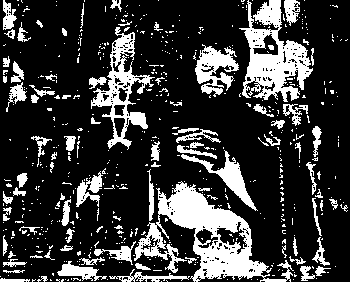
This photograph shows Frater Marabas decanting a
concoction in his Laboratory in Leeds.
Thank you for
visiting us at the Sorcerer's Apprentice®, Since 1975 Europe's
Original Occult Books and Equipment Supplier. Remember us as a
time-tested source of quality material and products the next time you
need any information or paraphernalia Connected with the Supernatural -
Click here to return
to the front page:
-
-

DISCLAIMER: Along with
five billion other souls on this planet we believe in
Transmogrification (magic), and Transubstantiation (life in spirit).
About 85% of the world's population believe in the world of spirit.
Only 7% of the world's population are atheists (scientific
materialists) but these few people have a disproportionate influence
over the way we live because the government relies heavily on these
Scientific Soothsayers of the State to provide justification for their
decisions. This disclaimer is to comply with the prejudiced demands of
this lobby and should be seen as such. When we infer on these webpages
that something is successful for a particular purpose we mean that
traditionally it has been held by sages to be successful for that
purpose or/and that historically it is reputed to work in a novel,
legendary or peculiar way to succeed with that purpose, or/and that
people alive today have tried and recommended the item as being
successful or helping to a lesser or greater degree for that purpose
and therefore it may be worth trying. In most instances we will have
tested, experienced and confirmed the effects ourselves but we freely
admit that these items may not work in every instance or may work in
lesser ways than the examples quoted. We offer them out for historic
and curiosity value only as untested objects of pleasance. All use and
application of these items and information should be seen as
experimental. Magical effects cannot be proven nor guaranteed. We have
personally used and sold items like these for over three decades and
our experience is positive - however in order to make an informed
choice you should be aware that science disagrees about the existence
of magical forces and effects and insists that other mundane actors
will be working to cause the success experienced if any. Intending
purchasers should carefully read our full Duty of Care Statement of
Intent on ++naivecust.htm
REASONABLE RISK: Advice; Personal Consultations; Recommendations for
Applications: Marabas has an unparalleled grasp of esoteric methods
worldwide but he is not a god - he cannot indemnify customers from
risk. Only you know your exact circumstances, your medical history,
state of health and the progression of the problem so far. Only you can
judge whether it is in your interests to apply magic in your life. If
you ask us how a magician might resolve a problem then Marabas will
tell you but in our eyes magic is a force used to modify the course of
destiny and can cause peripheral changes which are not anticipated
therefore all magical operations are by qualification inherently
experimental. Our products are genuine, contain proper materials and
most importantly are designed with adept knowledge of magical method.
You cannot get a better chance of successfully experimenting with magic
but be under no illusion - it is an experiment undertaken entirely at
your own risk. The S.A. offers raw materials and literature
for curiosity's sake only. Marabas's historical knowledge is
given if asked. Under present law Marabas cannot 'prescribe' magical
actions or cures; we suggest only what an adept might do in your place.
To recapitulate: We are not selling you the magic
'cure', though it may very well turn out that way. We are providing the
opportunity to experiment with genuine magical methods to open up new
doors in your life. We can tell you how others have changed
their lives and how you might choose to do it for yourself but you are
responsible for your own experiments. We cannot indemnify people
from the repercussions of foolishness but we will sincerely do
everything we can to ensure your genuine success and this will be the
limit of our liability. Marabas's suggestions will always comply with
U.K. law but if you are unsure whether a suggestion might breach local
laws or regulations then you should consult your legal advisor before
ordering. Clients must be cognizant that all Magic and ritual work is
experimental and therefore undertaken by them at their own inception
and at their own risk. We provide all reasonable warnings and
protections for our clients but cannot be held responsible for
applications of their own invention of which we are uninformed. We will
readily offer our opinion on the advisability of proposed applications
of our products without charge. We expect the typical customer to be
reasonably fit and healthy. If you are significantly unwell, subject to
allergies, are taking a course of treatment, are pregnant, a registered
drug addict, have a history of chronic ailments or are undergoing
psychiatric help then it is your responsibility to clear your
intentions with your doctor and alert us before you embark upon a
purchase. . |
Click here to return to the top
of this page
|
 Access
to the
World-Famous Sorcerer's
Apprentice
Access
to the
World-Famous Sorcerer's
Apprentice